This day tour strings together the parts of inland Bali that most people come for, with a focus on Ubud and Kintamani. I like the simple promise: your driver also guides you, and you won’t spend the day figuring out buses, ticket lines, or taxi haggling.
Two things I especially like: the tour is all-inclusive with entry tickets, bottled water, and lunch, and you get a private setup so the day feels paced instead of rushed.
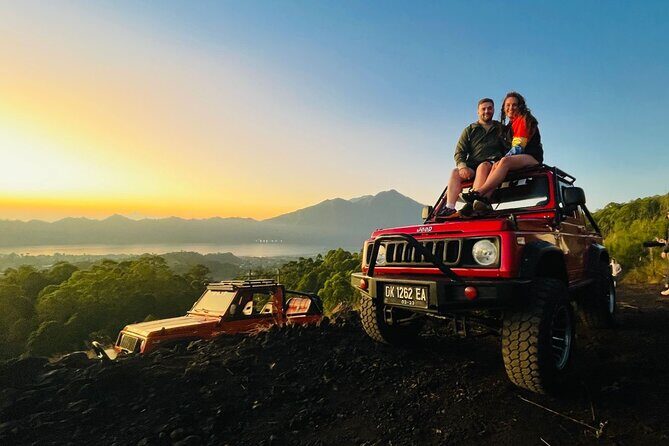
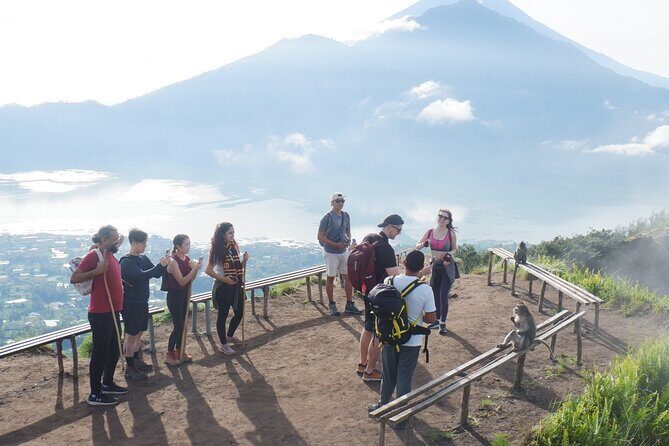
One possible drawback is the classic Bali reality: you’re depending on decent weather for the best views around Kintamani and volcano country, so cloudy or rainy conditions can change what you see.
In This Review
- Quick hits: what makes this tour worth your time
- Why the Ubud and Kintamani route feels smarter than doing it piece by piece
- Starting from Kuta at 8:00 and how hotel pickup changes the day
- Sunsri House of Jewelry in Celuk: watching Bali artisans work step by step
- Batuan Temple: the kind of Balinese ornament you’ll notice once someone points it out
- Tirta Empul (Holy Water Temple): a 1-hour stop with real ritual context
- Satria Agrowisata coffee and tea tasting: kopi luwak style, plus a break from temples
- The Amora Bali lunch over Mount and Lake Batur: where the day slows down
- Tegalalang Rice Terrace: photo-worthy fields plus a glimpse of how farming works
- Sacred Monkey Forest Sanctuary and the Ubud rhythm shift
- Bali swing and Ubud Art Market: time for fun, plus a chance to shop thoughtfully
- What this tour is really buying you: pace, guidance, and fewer logistics headaches
- Who should book this Bali day tour (and who should skip it)
- Should you book: my honest take on Ubud and Kintamani in one guided day
- FAQ
- What is the duration of the tour?
- What time does the tour start?
- Is hotel pickup included?
- Is this a private tour?
- What’s included in the price?
- Do I need to buy entry tickets separately?
- What places will we visit?
- Is there a minimum number of travelers?
- What about cancellations and weather?
- Is a baby car seat included?
Quick hits: what makes this tour worth your time
- Hotel pickup and private transportation so you’re not wrestling local routes for 10 hours
- Driver as an English-speaking guide (including history and culture context, if you get Putu)
- Temples that teach you something, from holy water rituals to carved Balinese ornament details
- Coffee and tea tasting at Satria Agrowisata, including kopi luwak style coffee
- Kintamani lunch with mountain-and-lake views at The Amora Bali
- Ubud add-ons like Tegalalang rice terraces, Sacred Monkey Forest, and time for the Art Market
Why the Ubud and Kintamani route feels smarter than doing it piece by piece
In Bali, inland days can turn into a puzzle: one temple is in one direction, lunch is in another, and the volcano viewpoints are farther than they look on a map. This tour is designed to solve that problem by stitching everything into one easy loop, with a driver-guide who stays with you.
I also like that it’s private, meaning you can move at the speed that works for your group. If you want more time at a market or less time at a viewpoint, the tour is described as customizable to your needs.
Finally, the “one day, many stops” approach is perfect if you’re short on time but still want real Bali culture and not just a quick hit at the most famous photos.
Other Kintamani volcano tours at Mount Batur & Bali highlands


Starting from Kuta at 8:00 and how hotel pickup changes the day
The tour starts at 8:00 am, and pickup is offered from hotels around Bali. That matters more than people think. Early pickup usually means fewer late-day compromises, like arriving at temples after the crowds settle into chaos or missing the most comfortable part of the day for outdoor views.
You’re also told you’ll receive a mobile ticket. That’s a small thing, but on travel days it helps you get moving without rummaging for paperwork.
A private vehicle for roughly 10 hours also means you can take restroom breaks and regroup without turning the day into a scavenger hunt.
Sunsri House of Jewelry in Celuk: watching Bali artisans work step by step
Your first stop is Sunsri House of Jewelry in Celuk (a village known for jewelry craft). The tour description focuses on how local artisans combine ancestral expertise and technology, starting from the design process and moving through the crafting and assembling steps.
If you like seeing the “how,” this stop works well. It’s not just a shop stop. It’s framed as a look at production stages, which can help you understand why Balinese jewelry often has such a specific look and finish.
One practical note: you’ll likely be on a time box (this stop is listed at 30 minutes). If you’re serious about buying, I’d go in with a plan for what you want to look at first, so you’re not spending your limited time comparing everything.
Batuan Temple: the kind of Balinese ornament you’ll notice once someone points it out
Next up is Batuan Temple, a local Balinese Hindu temple cared for by residents of the Batuan countryside. The tour highlights how beautiful the temple is, with full Balinese ornaments and a roof temple building.
This stop can be short on the clock, but it’s one of the best places to learn how Bali temples communicate meaning through design. Once someone explains what to look for, the details stop feeling like decoration and start feeling like a language.
If you’re sensitive to heat, bring water and take slow pauses. Temple visits in the morning can still be warm, and your next stops keep you outdoors.
Tirta Empul (Holy Water Temple): a 1-hour stop with real ritual context
Tirta Empul Temple is next, and it’s described as a worship site that’s drawn people for over a thousand years. The springs here are said to have been created by the god Indra and are believed to have curative properties.
Even if you’re not participating in a ritual, the setting helps you understand why this is a pilgrimage-type place, not just a scenic temple. The tour gives you enough time for a calm walk and to take in how people move through the space.
One consideration: water and ritual sites can bring people who dress and act very differently than typical tourist areas. I’d treat this as a respectful cultural stop first, photo spot second.
Other all-inclusive Mount Batur tours we've reviewed




Satria Agrowisata coffee and tea tasting: kopi luwak style, plus a break from temples
After the temple circuit, you get a change of pace at Satria Agrowisata. This is a jungle-setting plantation where you can taste Bali teas and coffees.
The tour description calls out kopi luwak (civet coffee) and notes that it’s produced from beans previously eaten, partially processed. That kind of detail helps you understand that you’re not just sampling coffee; you’re sampling a food story with a very specific production method.
This stop is listed as about 1 hour. I find that’s the right amount of time for tastings because you can try a couple of options without feeling stuck. If you’re a coffee fan, you’ll also get a better sense of why Bali coffee culture is so tied to local agriculture.
Tip for the taste test: when you’re comparing drinks, pause and breathe between sips. Coffee can blur together fast if you’re rushing.
The Amora Bali lunch over Mount and Lake Batur: where the day slows down
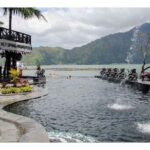
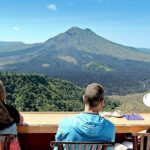
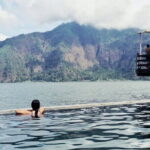
Lunch is at The Amora Bali, described as a leisurely affair in an atmosphere of simplicity. You’re served a buffet lunch for about 1 hour, and the key thing here is the view: the restaurant looks over Mount and Lake Batur.
This is where the day’s rhythm shifts. After temple steps and plantation tastings, lunch gives you a seat, shade, and a chance to refuel before outdoor viewpoints and Ubud stops.
One practical point: if you care about the view, arrive hungry and pick a spot early. It can be hard to change seats later once people fill in.
Tegalalang Rice Terrace: photo-worthy fields plus a glimpse of how farming works
Then it’s on to Tegalalang Rice Terrace, a classic Ubud-area sight. The description emphasizes how the rice terrace is designed with hollowing rice fields and how it’s positioned on a hill bank.
What I like about this stop is that it’s not just about the view. The tour frames it as a place where you can see Balinese farmers working in the rice fields, including activity in the oblique hillside areas.
Your time here is listed as 30 minutes, so come prepared to move a little and choose your photo points quickly. Also, if it’s sunny, wear sunscreen. Terrace viewing can mean you’re standing in open light.
Sacred Monkey Forest Sanctuary and the Ubud rhythm shift
In the middle of your Ubud time, you’ll visit Sacred Monkey Forest Sanctuary. It’s described as a small tropical forest where you can see the group of monkeys that live there.
This stop works best if you approach it like a walk through a local habitat, not like a zoo. You’ll get a sense of why the area feels like it’s both wildlife and sanctuary.
A practical consideration: keep an eye on your belongings. Monkeys are curious, and you don’t want the day’s stress to come from something avoidable.
Bali swing and Ubud Art Market: time for fun, plus a chance to shop thoughtfully
The tour schedule also includes two Ubud-style add-ons: Bali swing in Ubud and Ubud Art Market. That’s a useful pairing because it gives you both an active, playful photo moment and time to browse arts and local goods.
Since the tour data doesn’t specify what’s included beyond entry tickets for the listed sites, you should treat swing details as something to confirm if you have strong expectations about coverage. For the Art Market, just plan to bargain politely if it’s your thing, and budget some small cash for souvenirs if you prefer to buy there.
This mix is why the itinerary feels like a day that fits real travelers. You get culture, nature, and a couple of easy-to-plan “Ubud moments” without having to coordinate them yourself.
What this tour is really buying you: pace, guidance, and fewer logistics headaches
At $67.20 per person for about 10 hours, the biggest value isn’t just “a car.” It’s the fact that entry tickets, bottled water, and lunch are included, plus private transportation.
That matters because it removes the little costs that stack up when you self-plan: buying separate tickets, paying for multiple local drivers, and losing time to unclear opening hours. A guided private day doesn’t automatically cost less than DIY, but it can absolutely cost less in energy and lost time.
Also, this tour is private, with a minimum booking of 2 persons. If you’re traveling as a duo, that’s often the sweet spot where private doesn’t feel wasteful.
One more thing: the tour is described as having an English-speaking driver who serves as a guide, and one highly praised experience specifically notes history and culture taught by a driver named Putu. That’s the difference between seeing places and understanding what you’re looking at.
Who should book this Bali day tour (and who should skip it)
This tour is a great fit if you want inland Bali highlights in one day and you don’t want to manage transportation between temples, rice terraces, and viewpoints. It’s also ideal if you like a structured route but still appreciate a bit of flexibility, since the itinerary can be customized.
If you’re the type who wants long, slow museum-style pacing and deep time at one site, the stop timing may feel quick. With multiple locations across Ubud and the Kintamani volcano area, the day is designed to move.
Also, if you’re traveling during a period of frequent rain, remember the tour requires good weather for the best experience. You might still go, but you may find views are less impressive than you hoped.
Should you book: my honest take on Ubud and Kintamani in one guided day
I’d book this tour if your priority is an efficient, guided inland Bali day with temples, rice terraces, coffee tasting, and a scenic lunch, all handled for you. The included entry tickets and the hotel pickup make it feel simpler than piecing together your own schedule.
It’s also worth considering if you care about cultural context. When your guide brings the story—like Putu is praised for doing—you get more out of each stop than you would from a checklist.
I’d hesitate only if you need a very relaxed day with zero movement, or if your dates have a high chance of rain and you’re obsessed with volcano-view photos. Otherwise, this is a solid value way to see what inland Bali is famous for.
FAQ
What is the duration of the tour?
The tour runs for about 10 hours.
What time does the tour start?
The start time is 8:00 am.
Is hotel pickup included?
Pickup is offered from hotels around Bali.
Is this a private tour?
Yes. It’s private, and only your group participates.
What’s included in the price?
The tour includes private transportation, a lunch buffet, bottled water, an English-speaking driver who serves as a guide, and all entrance tickets to the listed sites.
Do I need to buy entry tickets separately?
No. Entrance tickets are included for the sites on the itinerary.
What places will we visit?
You’ll visit inland Bali highlights around Ubud and Kintamani, including stops such as Sunsri House of Jewelry, Batuan Temple, Tirta Empul Temple, Satria Agrowisata, The Amora Bali for lunch, Tegalalang Rice Terrace, Sacred Monkey Forest Sanctuary, plus time for Bali swing in Ubud and Ubud Art Market.
Is there a minimum number of travelers?
Yes. The minimum booking is 2 persons.
What about cancellations and weather?
Cancellation is free up to 24 hours in advance for a full refund. The tour requires good weather, and if it’s canceled due to poor weather, you’ll be offered another date or a full refund.
Is a baby car seat included?
A baby car seat is not included and is available at extra cost (IDR 50,000).